
Northampton County Former Owner Timeline
Build the timeline one transfer at a time. Begin with a verified parcel and treat every conveyance as its own event. The newest deed supplies the grantee and the grantor. It also gives the recording reference, the date, and the legal description. That prior owner's own acquisition deed becomes the next row. Some transfers are not ordinary sales. A will, an executor deed, a partition, a boundary agreement, or a court order may explain a change that looks odd at first. Write the book and page or instrument number beside each name so anyone can retrace the chain later.
| Source | Years It Covers | Where Held | What It Shows |
|---|---|---|---|
| SRA deed index and images | 1997-present | Virginia SRA / Clerk | Recorded parties, date, type, and instrument reference |
| Will index and images | Index from 1990; images from 1997 | Virginia SRA / Clerk probate | Estate leads and supporting transfers |
| Deed books and indexes | Before the online 1997 range | Northampton Clerk and microfilm | Earlier conveyances and party names |
| Historic plats and surveys | Holdings vary by series | Clerk / Library of Virginia | Lot, boundary, and survey references |
Treat the worksheet as a working tool. It is not a claim about any particular Northampton County parcel. Fill in a row only after reading the deed itself. Stop when something breaks the pattern. A lot split, an estate transfer, or a legal description that no longer matches the current plat all call for a pause. The county assessment record can point you toward a deed reference. It cannot prove the whole chain on its own.
Northampton County Deed Index Cutoff
The Clerk reports deed index and image coverage in Virginia SRA from 1997 to the present. Wills carry an index from 1990, with images starting in 1997. Judgments and UCC index coverage begins that same year. When your chain hits the online boundary, keep going. The prior owner is rarely the first owner, and older deeds almost always exist in the Clerk's historical indexes and books.
SRA is built around recorded parties and instrument details. Search the current grantee first. Read the instrument. Then search that deed's grantor as a grantee to reach the next link back. At each step, note the recording date, the book and page or instrument reference, any parcel clue, and whether the image opens. Common names need narrowing. Filter by year, property description, or instrument type to keep the results manageable.
The Virginia SRA portal is the online index route for the modern portion of a Northampton County title chain.
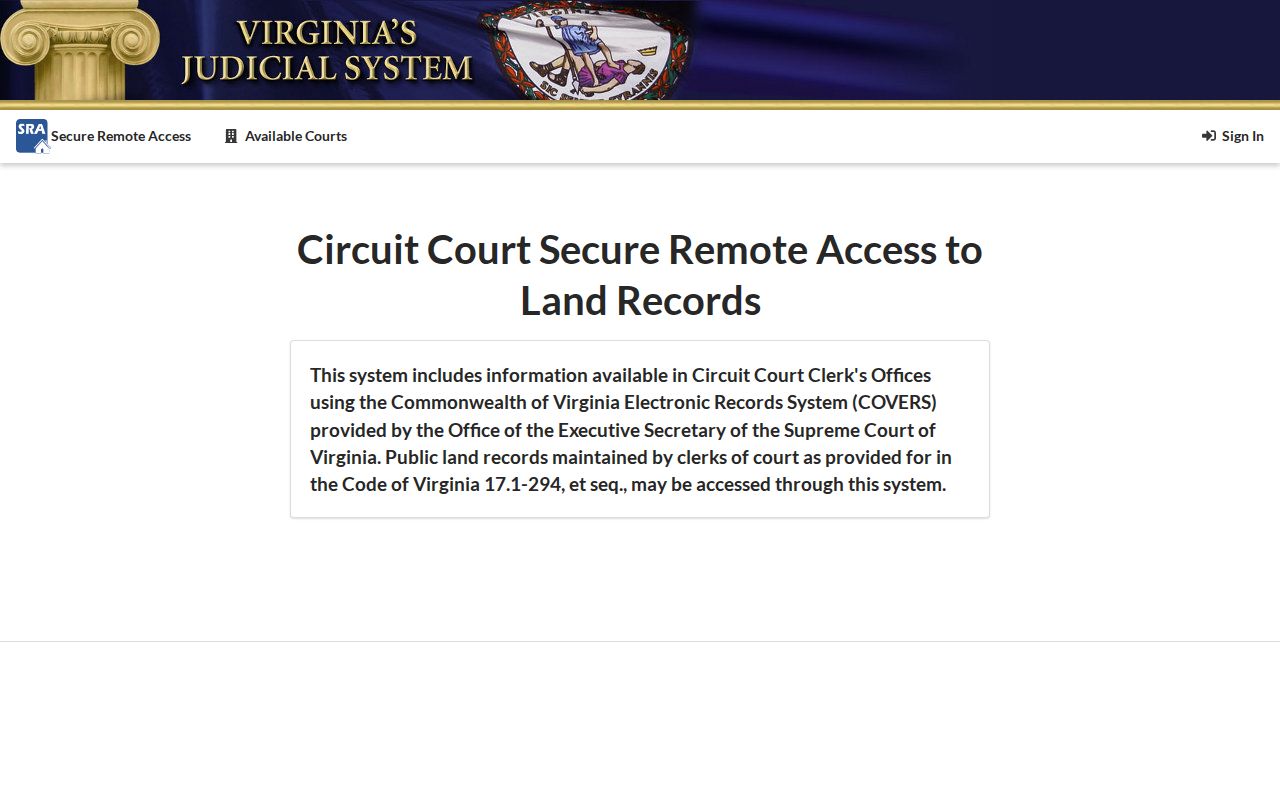
The index only identifies a filing. Open the document image, or request a copy, before it earns a line in the ownership timeline.
The Northampton Clerk’s records page describes the local land-record office and its historical collection.
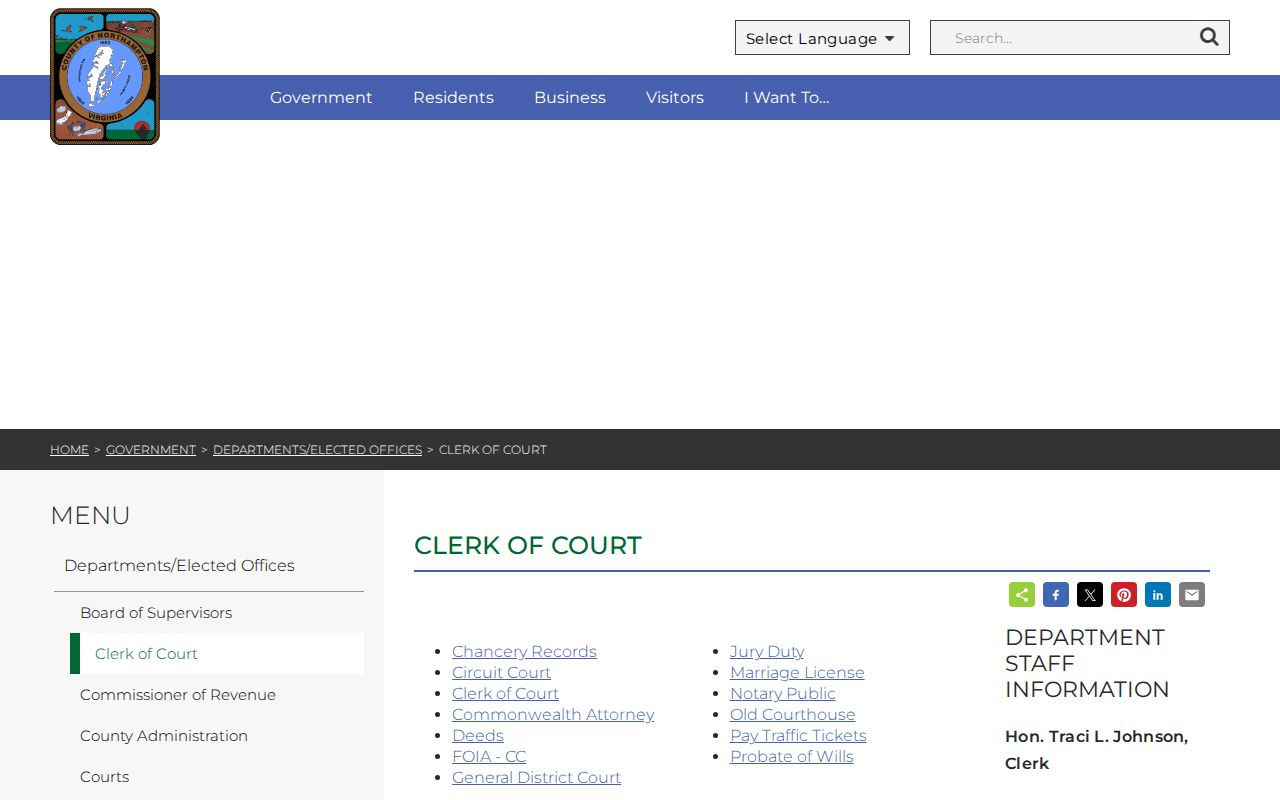
Use the Clerk’s page to send an older citation to the records room or the request desk.
Follow a Northampton County Deed Grantor
The grantor-grantee method is a repeated handoff, not one broad name search. Put the current owner in as grantee. Read the deed for the prior grantor and the property description. Then search that grantor as grantee to surface the earlier acquisition. Compare the land described in both instruments. Not every link is an arm's-length sale. Gifts, marriages, inheritances, partitions, and court orders all move title too.
- Find the newest recorded deed and note the current grantee and legal description.
- Use the instrument’s grantor as the next search name and confirm the same parcel.
- Repeat by changing party roles, keeping each recording citation and transfer type.
- At 1997, continue in Clerk books and indexes or the Library of Virginia microfilm.
- Grantor / grantee
- [Seller / buyer on a deed.]
- Chain of title
- [The ordered sequence of past deeds.]
- Legal description
- [Why it beats the street address for old records.]
Northampton County’s Older Land Record Trail
Northampton County's record history begins under the older name Accawmak. The Library of Virginia finding aid lists County Court Orders, Wills, Deeds Etc., No. 1 for 1632 through 1640. It notes that the county name became Northampton in July 1642. The Clerk describes continuous court records from 1632. That depth is rare. It does not make every page searchable online. Some historical indexes are hard to read.
Older searches may draw on handwritten grantor and grantee indexes. They may also draw on deed and order books, surveyors' records, probate files, and plats. LVA lists Surveyors' Record No. 2 from 1808 to 1833. The catalog names the holdings. Staff or the Clerk can help you locate a reel. They can also help with a volume or a copy route. Search both Accawmak and Northampton spellings. Try variant family name forms before calling an empty result a true gap.
Use the Library of Virginia Northampton finding aid to identify the cataloged historical holdings. Then ask for a specific volume.
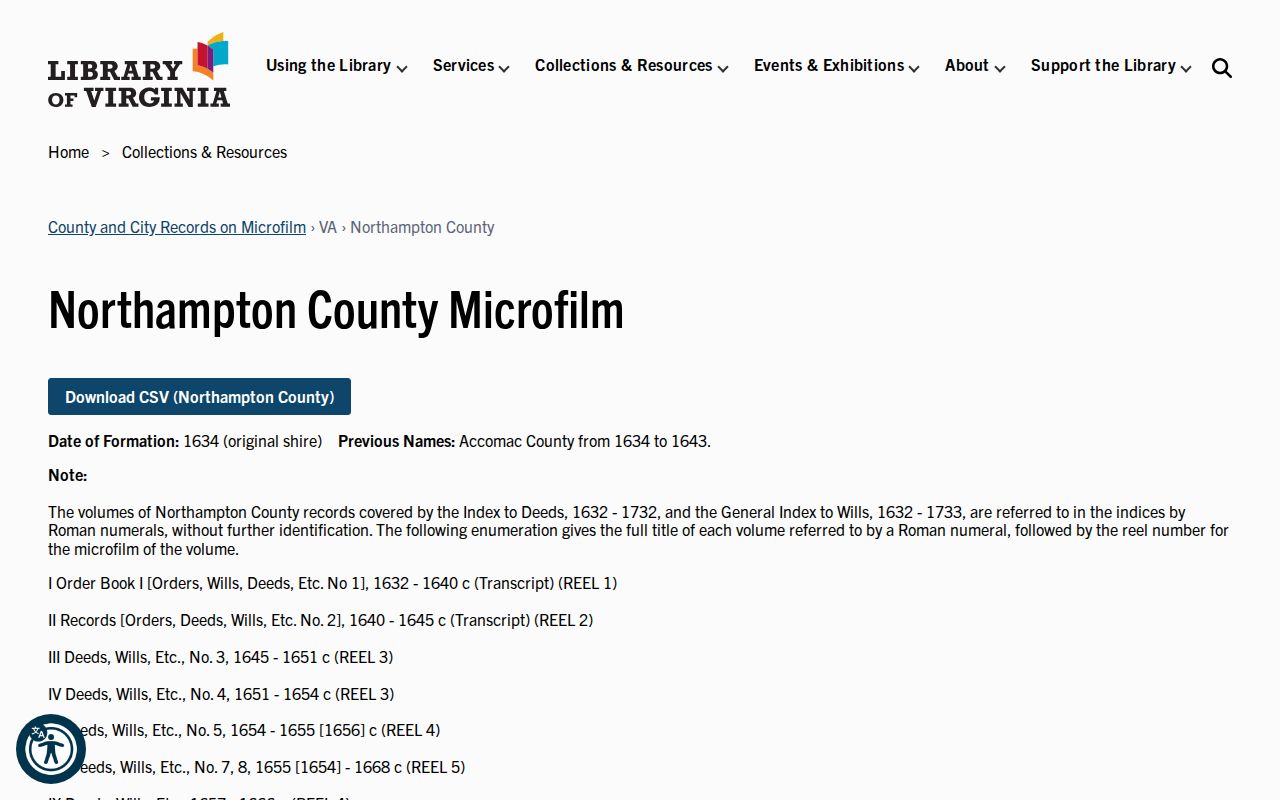
Move from the catalog citation to a specific source request. The catalog itself does not hold the deed image.
Northampton County Estate Owner Transfers
A former owner may have left title through probate rather than a sale. The Clerk's will index starts in 1990, and images run from 1997 forward. A probate file can hold the will. It can also hold the qualification of an executor or administrator, orders, and other estate records. A later executor's deed, commissioner's deed, distribution, or heir conveyance is common. It is often what connects the estate to the current tax owner.
Search with the decedent's full name and an approximate year. Then tie the estate file to a land instrument and the parcel's legal description. A death certificate can support identity and date. It is not title evidence. VDH access periods govern vital records. Restricted records require eligibility, ID, a written request, and a fee. Trace the property transfer itself through probate and the recorded deeds.
Match Northampton County Deeds to Today’s Parcel
An old deed rarely speaks in street addresses. Instead it names metes and bounds. It may cite a survey, a tract, or a lot inside a recorded plat. Northampton's CAMA and GIS help with the translation. Their map, block, lot, location, and parcel identifiers can bridge an old legal description to a parcel. That parcel exists today. Road names changed over the years, and some addresses arrived late. In those cases, ask Planning/GIS about address assignment records. Then follow the deed reference and plat to track the land itself.
A plat shows how lots were arranged, not where the lines sit today. Compare its bearings, acreage, neighboring tracts, and adjoining owners against the deed sequence. A division changes things. Never force one modern map polygon onto an older whole-tract description. Follow each later conveyance and the recorded subdivision plat instead.
Gaps in a Northampton County Deed Chain
A name missing from the deed index has many innocent explanations. Spelling variants are common. An entry may sit under an earlier county name. A transfer may have moved through probate, or the deed description may use a tract or plat rather than a street address. Before calling it a break, search both grantor and grantee roles and read the legal description closely. Look also for wills, executor deeds, partitions, releases, and recorded plats.
The online index begins at 1997. Image access is separate from the free index. For an older instrument, ask the Clerk which book or index covers it. The Library of Virginia finding aid points to the relevant microfilm series. Write down your search terms and citations. That habit makes the next step easy to reproduce.
Northampton County Deed Records Time Depth
Two different depths exist here. The online deed index reaches back to 1997. The Clerk's historical court-record claim reaches to 1632. The Library of Virginia finding aid identifies land and court books from the Accawmak period. It also lists later survey records. These are distinct kinds of access: searchable modern entries, courthouse volumes, microfilm, and archival descriptions. Treat the 1997 cutoff as the edge of remote images. It is not a break in Northampton's land history.
Northampton has no documented courthouse-loss event. If a chain link seems missing, start with the basics. Check spelling, the grantor or grantee role, and the legal description. Then consider probate transfers, plats, and the earlier county name. The Clerk or LVA can point to the right book and index. A gap in an online result does not prove a conveyance never happened.
Lawful use. [1-2 sentences - former-owner research in Northampton County is for house history, title research, and property diligence; using it to track or harass any living person is a crime under Virginia law.]