
Fields on the Northampton County Owner Record
Two owner lines anchor each Northampton County parcel record. Owner Line 1 and Owner Line 2 carry the tax-roll owner. That owner can be a person or an entity. Around them sit location, municipality, map, block, lot, acreage, a deed reference, and the CAMA_ID and PARCEL_ID keys. The fields pin the owner to a mapped parcel. They are not an occupancy list. Still, a field can lag a filing that just reached the Clerk.
| Owner lines | The person, entity, or estate listed for tax administration |
|---|---|
| Vesting | Read the deed for how the grantee holds the described interest |
| Mailing address | Where the tax account sends notices; may differ from the land |
| Situs / location | The county’s location description for the parcel |
| Parcel identifiers | Tax map, CAMA_ID, and GIS PARCEL_ID |
| Deed field | A starting reference to check against the recorded instrument |
An owner of record can be a company. Trusts, estates, and absentee landlords all appear there too. CAMA keeps the property location separate from the owner mailing address, which explains why the two rarely match. Neither field tells you who is inside the house. For legal ownership, read the newest deed and its vesting terms, then look for a later transfer or probate instrument.
The county parcel layer inventory lays the owner and parcel fields side by side, which makes it easier to tie a Northampton County current owner entry to the GIS map. Start there before trusting any single name.
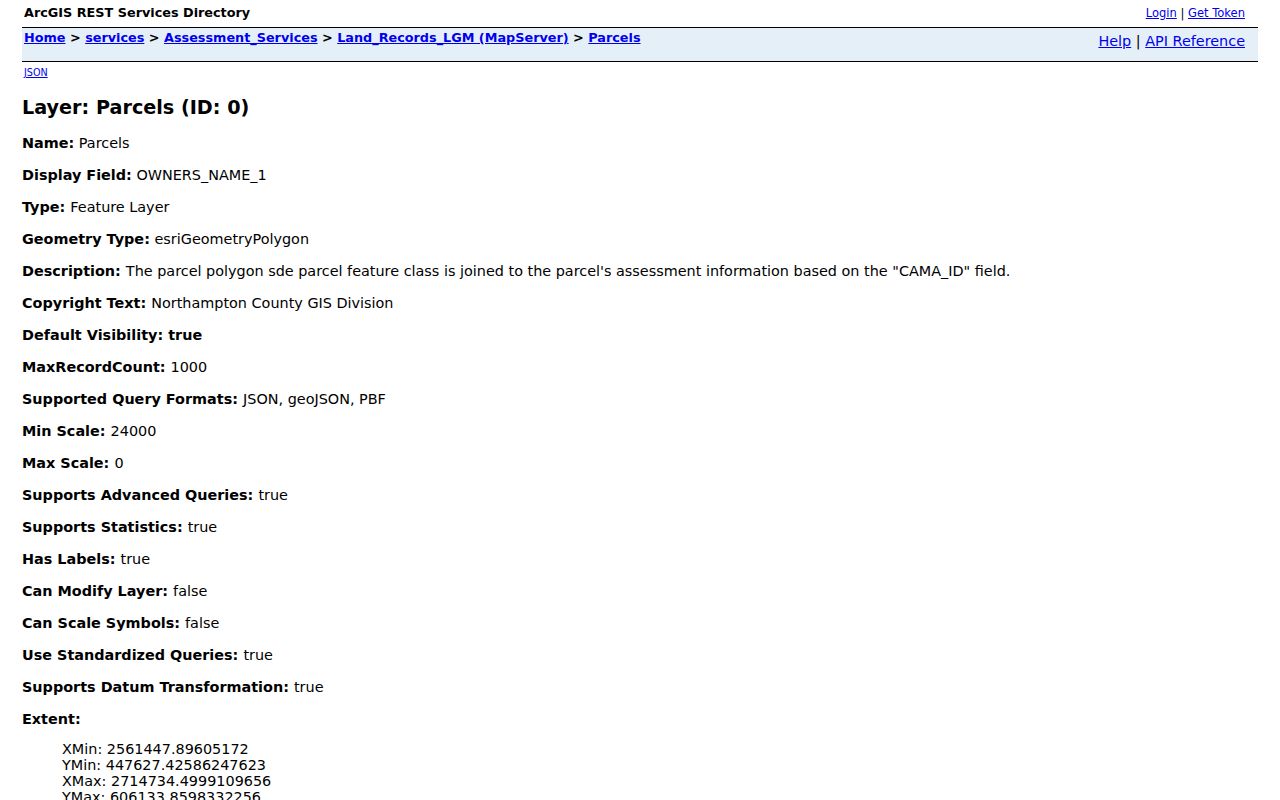
Check the parcel IDs before trusting the owner name.
Find the Northampton County Owner in CAMA
The CAMA landing page offers four ways in. These are Address, Owner Name, Par Rec #, and Tax Map No. Address is usually the cleanest route. An owner search helps surface more parcels under one spelling. The county does not state its partial-match rules, so try a few spellings. Check both owner lines before assuming two rows describe the same tract. Compare the situs and municipality too.
The county updates CAMA monthly, yet a brand-new deed can still beat the refresh. That lag matters. For a recent change, the recorded deed is the comparison point, not the portal. Keep the parcel key and the GIS parcel ID together. That way the property's identity never rests on a name alone.
Open Northampton County CAMA to begin. Its landing page displays each search choice.
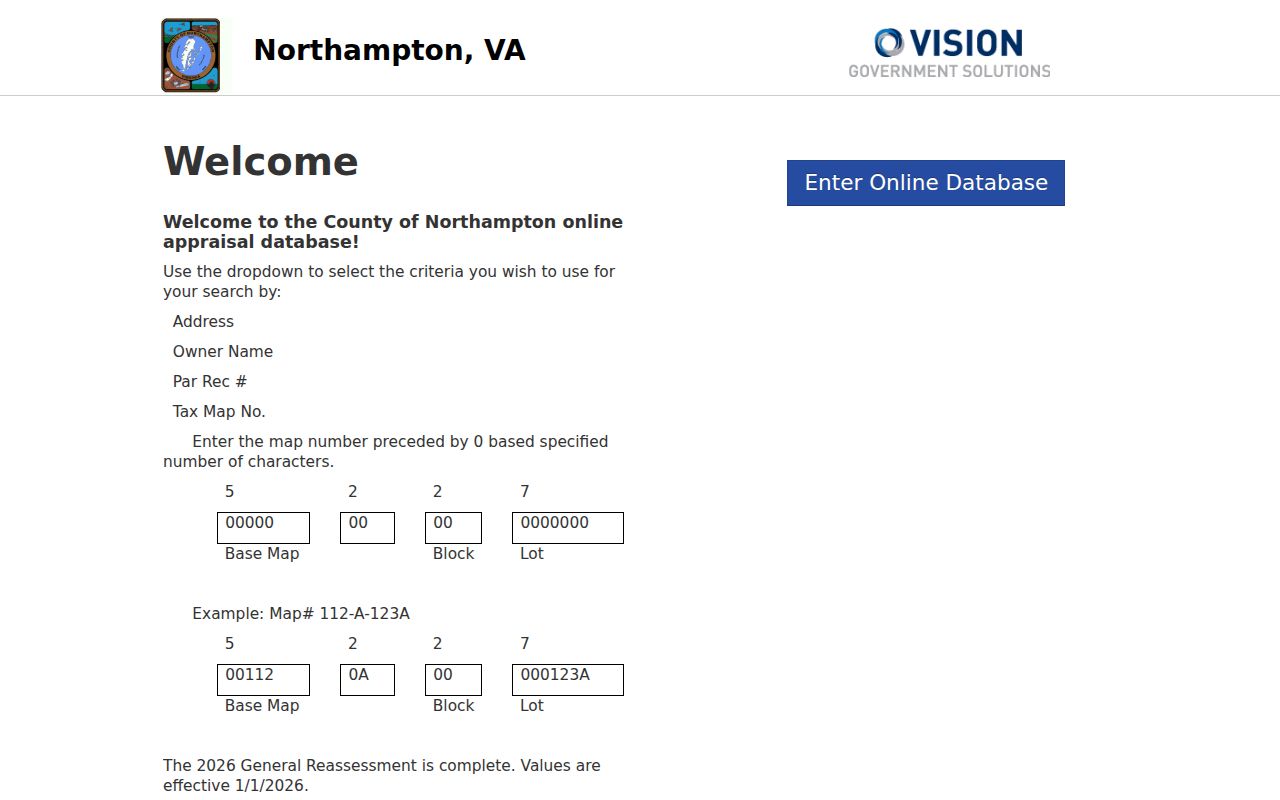
Once a result opens, check its parcel ID and location against GIS. Only then use the name elsewhere.
Verify the Northampton County Deed Grantee
The Clerk's recorded document names the grantee. Search by owner name or parcel clue in SRA. Read the newest matching instrument from start to finish. Then compare its legal description against the CAMA parcel before treating the deed as the answer. The online deed index reaches back to 1997. Older transfers live in books and microfilm, and some deed images stay limited to authorized users even where the index is open.
- Copy the CAMA owner line, tax-map number, CAMA_ID, and location.
- Search SRA for that party as grantee and compare recording dates and instrument type.
- Read the deed’s grantee, vesting language, legal description, and recording reference.
- Check for a later deed, probate instrument, or court order before calling the name current.
SRA is the finding aid. The recorded image holds the deed wording and legal description. Index access may be open while deed images require an authorized subscription. When a document is not online, request it from the Clerk by party name, recording date or reference, and parcel description. Say whether you need a plain or certified copy. Ask the fee before placing the request.
- Owner of record
- The tax-roll party listed for a parcel; confirm legal title in the deed.
- Vesting
- The deed language describing how the grantee holds the conveyed interest.
- Registered agent
- A contact named in a business entity filing, not proof of parcel ownership.
When the Current Owner Is an Entity
A deed sometimes names an LLC or corporation. Copy the name exactly as written. Then search the Virginia SCC Clerk's Information System for filing history, status, registered agent, and principal office. Those details help interpret the grantee. They do not prove the parcel belongs to that entity; the recorded deed and its legal description remain the property link.
Estates show up in this trail too. Set a will beside the executor qualification, the probate order, and any executor, commissioner, or heir deed. The tax roll may lag the recording. Never treat a family member or registered agent as the parcel owner unless the land record itself says so.
How Current Is the Northampton County Owner?
Northampton refreshes CAMA monthly and GIS quarterly. Those cycles rarely line up. A sale, death, court order, or correction can slip in between refreshes and leave owner and map attributes out of step. Note the date you checked each source. The newest deed settles a fresh transfer question. If the deed is recent and CAMA is older, ask the Commissioner whether the roll has processed the change.
The Clerk's online deed index starts in 1997. The courthouse history runs much older. A current owner check leans on modern records, but a decades-old parcel split or estate transfer can force a dive into an earlier plat or book reference to confirm the same tract.
Northampton County Owner Transfers and Corrections
Ownership moves fast on paper, but the tax roll can lag behind it. The Commissioner of the Revenue tracks those transfers for Northampton County. Recorded deeds and wills feed the assessment record, and tax-map corrections run through the same office. A gap appears when a deed is recorded but the CAMA owner line still lists a prior party. Ask staff whether the transfer has reached the roll. Include the Clerk's instrument reference and your parcel identifiers with that request. The office publishes no online correction form. No fixed processing time exists either. A phone call settles the route for a specific parcel.
Keep your notes tidy before you call. Group the owner line, situs location, mailing address, CAMA_ID, PARCEL_ID, and deed citation in one place. Those fields let staff tell a stale owner entry apart from a parcel split, a similar address, or an entity-name variation. The Treasurer's tax bill updates on its own schedule. Check that account separately when the mailing address matters.
A correction request should also separate the tax-roll owner entry from the recorded deed itself. Give the Commissioner the instrument date and the Clerk reference. The county posts no public transfer-status page. Only an office response can answer for one parcel.
Estate parcels follow a longer path. A will or intestate probate, executor or administrator qualification, a court order, and a later executor's, commissioner's, or heirs' deed can each play a part. A death record alone never updates the land title. Match the probate file and recorded conveyance against the same legal description and map identifiers before treating a surviving relative as the current grantee.
Northampton County Deed-Change Alerts
Virginia offers an alert service named VADeed Alert. It monitors filings by personal name, business name, or Tax Map and Parcel ID. When a match appears, the system emails a notice. Northampton County owners get a prompt to review each new instrument before it slips by. The service has limits. It cannot block a recording. It cannot judge a deed's validity. It also cannot replace a search of the Clerk's official record. Enrollment runs through the state alert registration page. That is the same monitoring service the Northampton Clerk references.
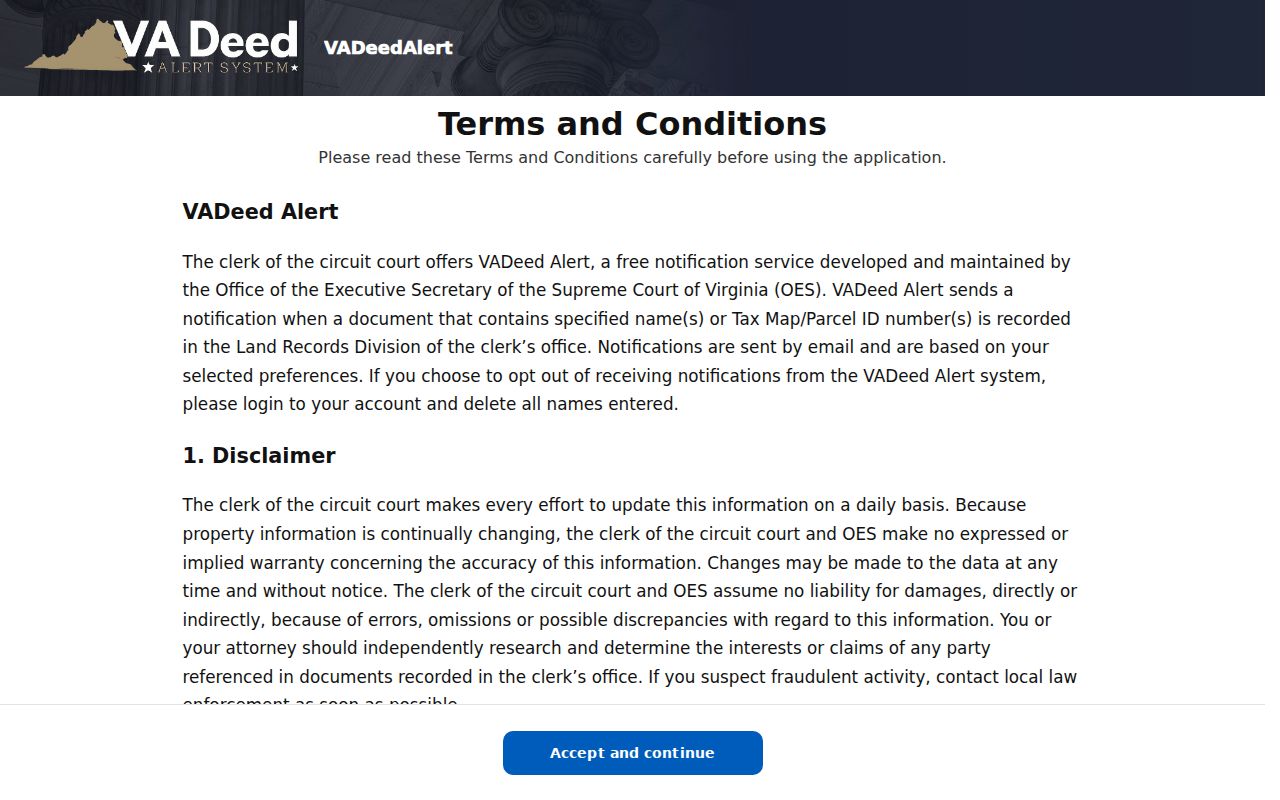
Verify the instrument record; ask the Clerk if unfamiliar.
Respect Northampton County Owner Privacy
A tax mailing address is a route for mail, not a verified residence. Virginia guards much of it. Protected fields, sealed court information, restricted vital records, and an Address Confidentiality Program supplying substitute addresses all limit access. Owner lines can also name an entity, an estate, or a representative. Use only the detail your property question needs. Never publish personal contact data without a valid reason.
Lawful use. Northampton County owner records can support a property inquiry or civic task. Do not use a name or mailing address to stalk, harass, intimidate, or harm anyone.