
Trace a Northampton County Property Owner
Start with CAMA when you have an address. Compare the location, municipality, acreage, tax map, and parcel identifiers it returns. If multiple parcels fit, open GIS and check the polygon along with its CAMA_ID. A name search works differently. Query the owner name. Then read both owner lines carefully, since an estate, trust, or company may hold title instead of an individual. The tax roll answers the owner-of-record question well enough for a first pass. But a recorded deed is the stronger check whenever a transfer is recent.
- Search the CAMA Address or Owner Name mode and record the situs, owner lines, and parcel key.
- Compare CAMA_ID, PARCEL_ID, and map/block/lot in the county GIS layer.
- Search the latest SRA deed by grantor or grantee and read the instrument image when available.
- If the grantee is an entity, use the Virginia SCC entity filing as context, not as proof of land title.
- Use the tax mailing address only as a correspondence clue, not as a statement of residence.
A name match alone proves little. Several Northampton tracts can share an owner. Two owners can share nearly identical names. So compare the location and municipality first, then match MAP, BLOCK, LOT, CAMA_ID, and PARCEL_ID before tying any deed party to a parcel. A person or business may sit on more than one row, and owners with similar names can carry completely different legal descriptions.
Northampton County’s Tax-Roll Owner
The Commissioner of the Revenue tracks owner transfers. Deeds and wills feed the work, along with the county assessment roll. The public parcel service labels its fields OWNER LINE 1 and OWNER LINE 2. The record also lists location and municipality. Acreage, tax map, CAMA_ID, PARCEL_ID, deed reference, and value fields round it out. Those fields show how the parcel sits in the assessment and GIS systems. Not every recorded transfer reaches the roll, though.
Northampton notes that CAMA updates monthly. A new deed can land after the latest refresh. A probate event may need a later recorded transfer before the tax record moves. For a transaction close in time, compare the CAMA name against the newest deed. Ask the Clerk or Commissioner when the records look out of step.
The county's CAMA portal is the place to start. The official page displays every mode available for finding a Northampton County parcel record.
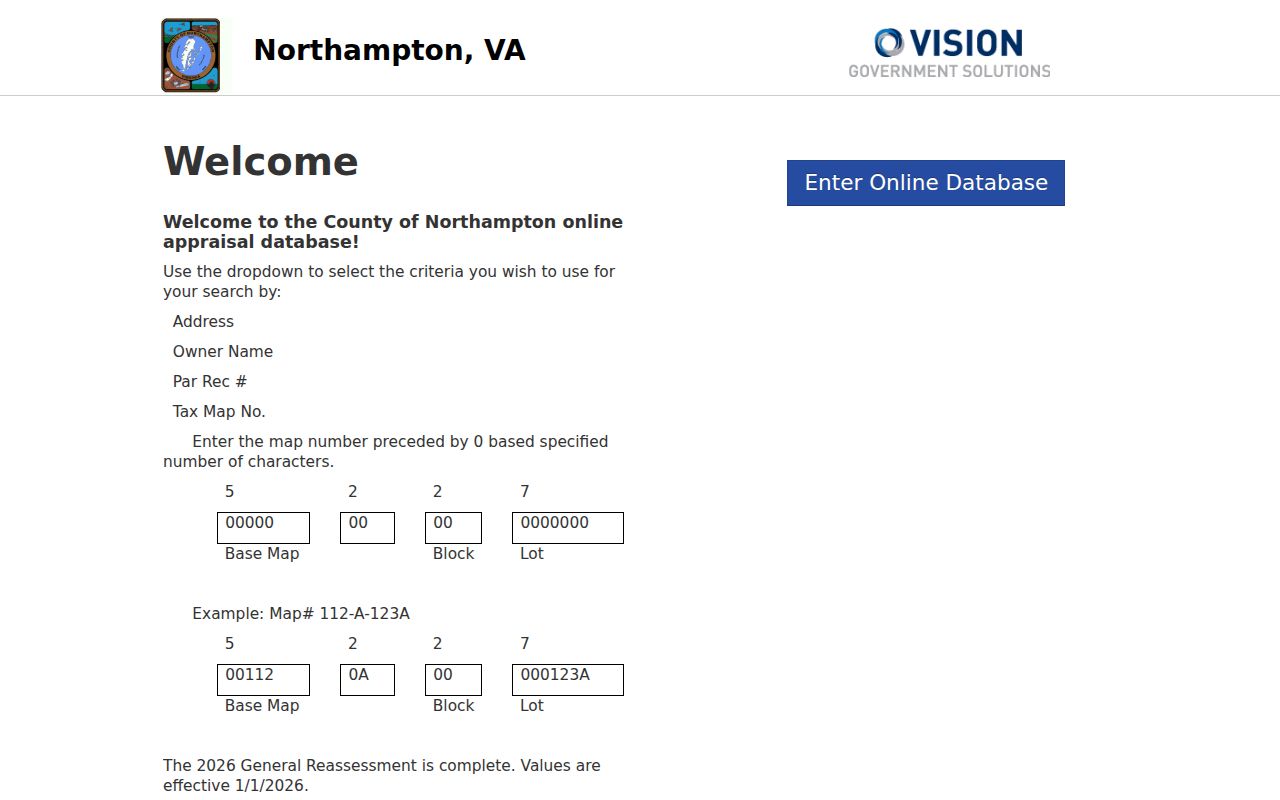
Pull the parcel card for the listed owner first, then check the Clerk's land record for the recorded vesting.
Compare Northampton County Owner Sources
The owner answer is strongest when two sources agree. CAMA gives the assessment owner plus mailing context. The land-record index lists the recorded parties. The instrument image supplies the legal description and transfer language. GIS ties assessment fields to the mapped tract. An SCC record may explain an LLC's filed agent or principal office, though it names a parcel owner only when the deed itself does.
| Source | Owner Info It Gives | Access |
|---|---|---|
| CAMA tax roll | Owner lines, mailing/situs context, parcel keys, and assessment | Free online search; monthly update |
| Clerk / SRA | Grantor, grantee, instrument, recording reference, and image access state | Index online from 1997; images may require subscription |
| County GIS | Mapped parcel, municipality, acreage, and joined owner fields | Public viewer and parcel service; quarterly updates |
| Virginia SCC | Entity status, filings, registered agent, and principal-office data | Entity context only; not a land-title record |
An owner of record is not always the occupant. A tax mailing address may point to a PO box. It may belong to an out-of-county owner. It may also name a trust, a business office, or an estate representative. Virginia's Address Confidentiality Program gives protected participants substitute addresses. Public-record exemptions can shield some details. Never infer where someone lives from a parcel card. Publish no more personal information than the property question demands.
The GIS parcel service publishes a field list on its parcel layer page. That inventory shows how owner lines sit beside the parcel and value fields.
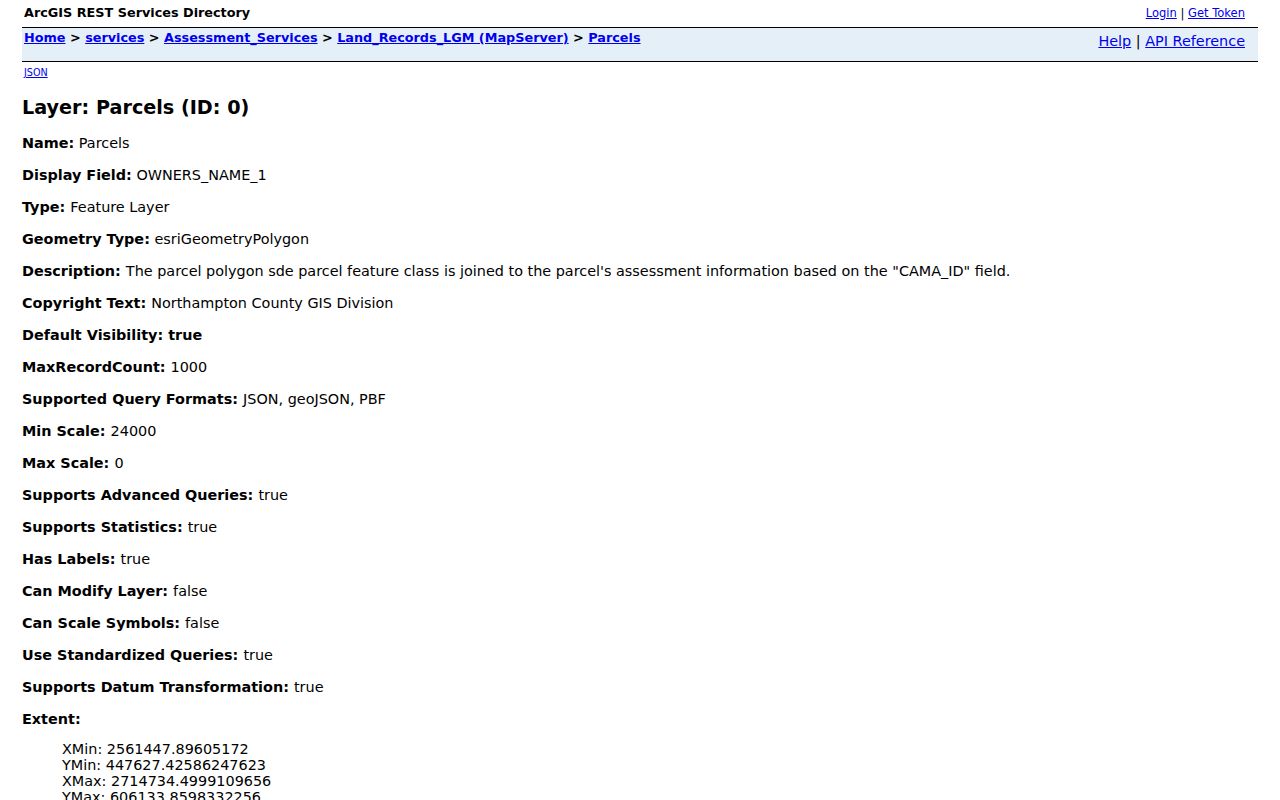
Use the identifiers to confirm the tract. Treat a joined owner field as assessment data, never as a record of current occupancy.
Northampton County Entity Owners
Title can rest with an LLC, corporation, trust, or estate rather than a person. CAMA may list a business name in its owner lines. The latest deed should name the grantee exactly. The Virginia SCC Clerk's Information System helps you check entity status and filings. It also covers the agent and principal office. Those records trace the entity's public filing trail. They never replace the county deed as proof that the entity owns a parcel.
Search the full name from the deed, punctuation and suffixes included. Keep a copy of the entity's state ID or filing reference. Where an estate holds title, compare the probate file and the executor qualification. Weigh the order and any executor or heir deed too. A name in the probate file may not be the current grantee. Check the recorded instrument before you rely on it.
Monitor a Northampton County Deed Name
Virginia's free VADeed Alert service watches a person's name, business name, or Tax Map/Parcel ID and sends email notices. The Clerk promotes the statewide tool for property-fraud awareness. It cannot stop a filing. It does not validate an instrument or undo a recorded document. Treat each alert as a prompt to open the Clerk's official index. Contact the office if an unfamiliar filing appears.
The VADeed Alert registration page explains how monitoring works. The state service is the same one linked from the Northampton Clerk page.
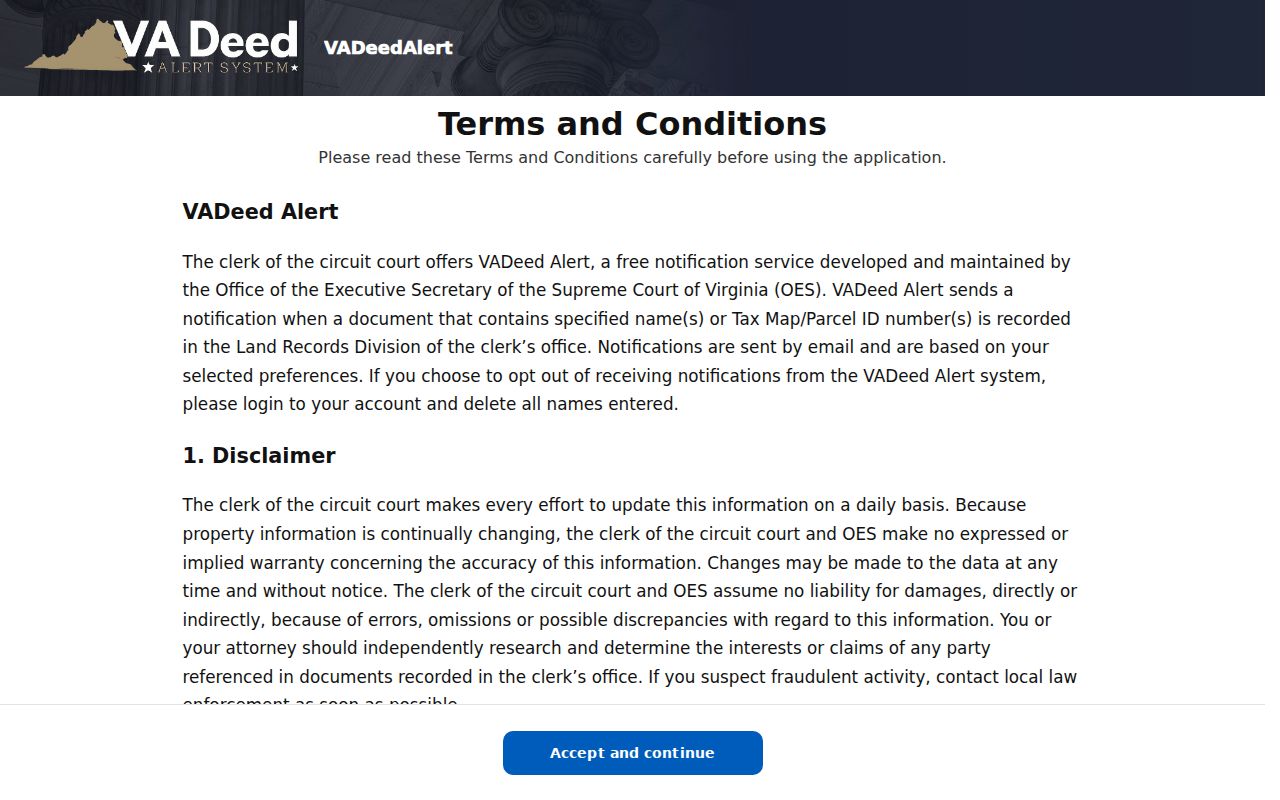
Let the alert flag the filing, then verify it yourself in the land-record system.
Trace a Northampton County Estate Owner
An estate named in a tax record points the search toward probate. A deed that predates a death does the same. Begin with the decedent's name. Add an approximate year. The Circuit Court Clerk holds the will or probate file. Look for the qualification of an executor or administrator. Look for the court order that followed, and any later executor, commissioner, or heir deed. Before treating an heir as the current owner, tie the land transfer back to the parcel's legal description.
Resolve a Northampton County Owner Mismatch
CAMA and a deed sometimes name different parties. Compare dates first. CAMA updates monthly, so the Clerk's recorded instrument may simply be newer. A deed can also describe a different lot after a split or consolidation. Check the full legal description, the map, block, and lot numbers, the CAMA_ID, and the municipality. If the property records still diverge, ask the Commissioner whether a transfer is pending. Ask the Clerk to confirm the recorded instrument reference too.
A name mismatch is not always an error. Spelling drifts. Marriage changes surnames. Entity suffixes, trust language, or an estate can all explain the gap. Search the variants and search both grantor and grantee roles. Never fill a hole in the deed chain with a mailing address. Never fill it with an online name result either.
If the disagreement persists, tailor the request to the record custodian. Give the situs, municipality, and Tax Map No. Include the CAMA_ID or PARCEL_ID, party names, and approximate transfer date. Add any known instrument reference. A general request for an owner history may not identify the right file. Under Virginia FOIA, describe existing public records with reasonable specificity. The office applies the statute's response framework. It may charge the actual reasonable cost of producing the records.
Record depth varies by source. Northampton SRA indexes deed records from 1997 forward. Older ownership may require deed books. It may also require courthouse material, Library of Virginia microfilm, or Eastern Shore Public Library sources. The Clerk's 1632 continuous-records statement and the earlier Accawmak book series are historical starting points. They are not a guarantee that every old parcel name surfaces in a modern online search.
For a will or probate matter, request the existing case or instrument by decedent name and approximate year. Then tie any later conveyance back to the parcel description. A probate file shows who was authorized to act for an estate. The recorded deed shows the land interest conveyed. Neither a mailing address nor an entity's registered agent supplies that link on its own.
Limits of a Northampton County Owner Search
A property owner lookup identifies names in public property records. It does not establish who lives at an address or reveal every beneficial interest behind a trust. It also cannot guarantee clear title. The tax roll may lag a recent transfer too. Verify the latest deed. Respect protections for sealed records, restricted personal fields, and Address Confidentiality Program participants.
Lawful use. Northampton County owner information is for property research and lawful due diligence. Do not use it to stalk, harass, intimidate, or harm a person.